

Scientists have identified a previously underappreciated factor accelerating the loss of Greenland’s ice sheet: meltwater lakes forming along the margins of retreating glaciers. The findings suggest these lakes are helping glaciers move faster and lose ice more quickly, potentially increasing Greenland’s contribution to global sea level rise in the coming decades.
Study Finds Meltwater Lakes Are Speeding Up Greenland’s Glaciers
Greenland has lost an average of 264 gigatons of ice each year since 2002, contributing roughly 0.8 millimeters annually to global sea level rise. While that may appear modest, the impact is significant given that hundreds of millions of people worldwide live in low-lying coastal areas vulnerable to flooding and erosion.
The primary cause of Greenland’s ice loss remains rising air and ocean temperatures driven by human-caused climate change. But new research led by the University of Leeds points to an additional mechanism intensifying the trend: ice-marginal lakes, or IMLs, that form at the edges of retreating glaciers.
Published in Communications Earth & Environment, the study concludes that these lakes are not simply byproducts of glacial retreat but active contributors to glacier destabilization.
How Ice-Marginal Lakes Accelerate Ice Loss
As glaciers retreat, they leave behind deep depressions carved into the landscape. These hollows fill with meltwater, creating lakes that can span up to 117 square kilometers—about 45 square miles.
When a glacier flows into one of these lakes, the water partially lifts the glacier’s front and exposes more of its underside to melting. This reduces friction between the glacier and the land beneath it, allowing the ice to move more rapidly. It also increases the likelihood of calving, the process in which large chunks of ice break away from a glacier’s edge.
Researchers analyzing satellite imagery found that glaciers terminating in ice-marginal lakes moved three times faster at their fronts than glaciers ending on land. The acceleration was not limited to the glacier edge; the effect extended as far as 3.5 kilometers, or roughly 2.2 miles, inland.
Researchers Warn Models May Underestimate Future Ice Loss
Lead author Connie Harpur said the findings show that ice-marginal lakes play a major role in glacier behavior and should be included in future climate projections.
“When glaciers flow faster, they deliver more ice to lower elevations, where it can melt, or to their fronts, where it can break away,” Harpur said. “By showing that lakes at the ice margin can substantially speed up glaciers, we identify an important process that needs to be included in predictions of future ice loss.”
Although similar glacier-lake interactions have been observed in the Himalayas, researchers say this is the first comprehensive measurement of the effect in Greenland.
Why Greenland’s Ice Matters for Global Sea Level Rise
Climate scientists closely monitor Greenland because the island’s ice sheet is one of the world’s largest reservoirs of freshwater. Accelerated melting there could have far-reaching implications for coastal communities from Florida to Bangladesh.
Study co-author Mark Smith said failing to account for ice-marginal lakes in predictive models could lead scientists to underestimate Greenland’s future impact on sea levels.
“If we do not account for lake effects, we may underestimate how dynamically parts of the ice sheet respond to future warming, and in turn how much Greenland will contribute to future sea level rise,” Smith said.
Arctic Wildlife Also Faces Growing Threats
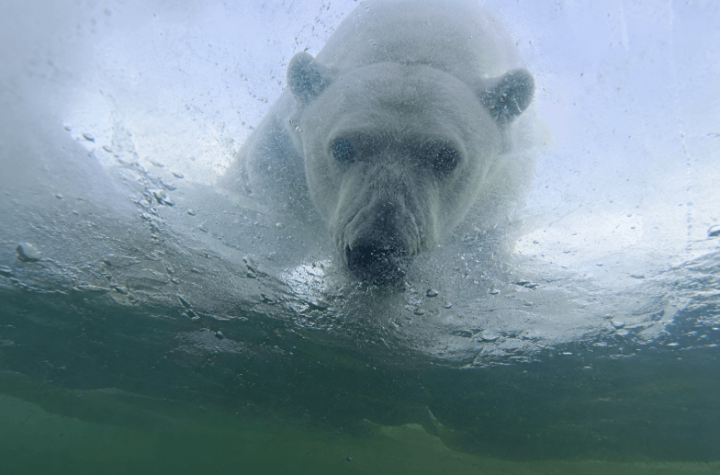
The rapid transformation of Greenland’s ice environment is affecting more than sea levels. Shrinking ice cover and warming Arctic waters are also disrupting habitats for species that depend on cold, stable sea ice, including polar bears, walruses, narwhals, and seals.
In parts of southeast Greenland, researchers note that summer sea ice has nearly disappeared since 2003, reshaping migration routes and reducing available habitat across the region.
Conclusion
The new findings suggest Greenland’s meltwater lakes are accelerating glacier retreat more than previously understood, adding urgency to efforts to refine climate and sea level projections. As the planet warms, scientists say accounting for these hidden dynamics will be critical to understanding how quickly Greenland’s ice sheet may shrink—and how much coastal communities worldwide may ultimately be affected.

John Irving writes for Bjournal, covering news, politics, business, technology, sport, entertainment, and lifestyle. He focuses on clear, reliable reporting and useful information, helping readers stay informed about current events, emerging trends, and stories that matter.



More Stories
Strawberry Moon Rises Monday Evening: June’s Full Moon Carries Deep Indigenous Roots
Ryan Preece Penalized After Incident With Ty Gibbs at Texas Motor Speedway
Scientists Capture Elusive “Glowing Trees” Phenomenon During Thunderstorms