

Germany’s automotive industry downturn is putting growing financial pressure on Friedrichshafen, a prosperous lakeside city whose economy has depended on auto parts manufacturer ZF Friedrichshafen for more than a century. As the company faces mounting losses, job cuts and fierce global competition, residents are losing access to public benefits and affordable services once supported by the industry’s success.
Friedrichshafen Faces Financial Strain as Germany’s Auto Industry Weakens
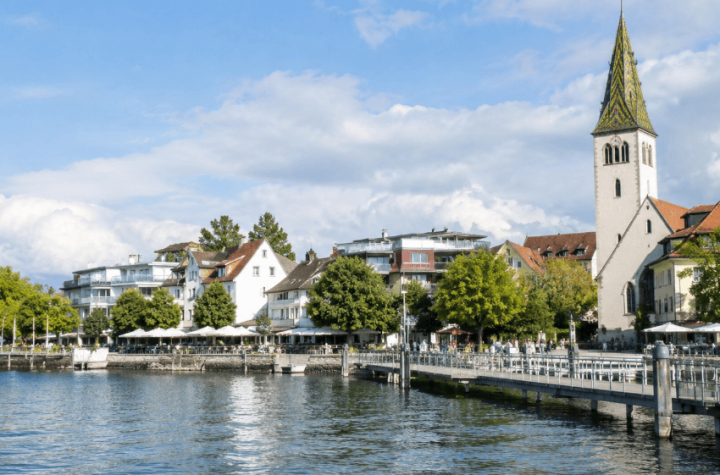
Located on the scenic shores of Lake Constance near the Swiss border, Friedrichshafen has long enjoyed an unusually close relationship with one of Germany’s largest automotive suppliers.
ZF Friedrichshafen, a major manufacturer of transmissions and other vehicle components, has been central to the city’s economic development for generations.
Unlike traditional industrial communities that depend primarily on employment from a major manufacturer, Friedrichshafen has also benefited directly from the company’s financial performance.
Through a foundation, the city owns more than 90% of ZF, giving the municipality a substantial stake in the company’s success.
During profitable years, ZF generated more than €100 million annually for the city, helping finance essential infrastructure and public services.
That revenue supported swimming pools, kindergartens and major construction projects, including a bridge.
However, the company’s deteriorating financial position has disrupted this longstanding arrangement, forcing local officials to reconsider spending priorities.
ZF Reports €2.1 Billion Loss Amid Electric Vehicle Transition
The challenges facing ZF reflect broader problems affecting Germany’s automotive industry.
Automakers and suppliers are navigating an uneven global transition toward electric vehicles while confronting increasingly aggressive competition from Chinese manufacturers.
These changes have placed considerable pressure on traditional automotive suppliers whose businesses were built around gasoline- and diesel-powered vehicles.
ZF reported a loss of €2.1 billion, approximately $2.3 billion, last year.
The company is also undertaking a major restructuring that could eliminate as many as 14,000 jobs across Germany, representing roughly one-quarter of its domestic workforce.
Thousands of Automotive Jobs at Risk
The planned workforce reductions highlight the scale of the industry’s transformation.
For Friedrichshafen, where ZF remains the largest employer, the restructuring presents economic challenges extending beyond the company’s factories.
Reduced employment and financial uncertainty could affect household spending, local businesses and the broader regional economy.
The situation also illustrates how difficulties at a major industrial company can spread through communities that have relied on manufacturing prosperity for decades.
ZF Foundation Revenue Drops as City Loses Major Funding Source
One of the most immediate consequences of ZF’s financial troubles is the sharp decline in money available to Friedrichshafen through the foundation.
The company’s contributions fell to €41 million last year, substantially below the amounts provided during more profitable periods.
This year, those payments are expected to disappear entirely.
According to current expectations, financial distributions may not resume until the end of the decade at the earliest.
The loss represents a significant setback for a city accustomed to using corporate profits to support public programs.
Child Care Costs Rise Sharply for Local Families
Residents are already experiencing the consequences through higher fees for municipal services.
Last year, parents protested outside Friedrichshafen’s city hall after monthly child care charges increased from €158 to €450.
The increase amounts to €292 per month, placing an additional financial burden on families.
Previously, revenue linked to ZF had helped cover much of the cost of child care, allowing the city to maintain comparatively affordable services.
With that funding disappearing, local households are being asked to shoulder a greater share of expenses.
The changes mark a significant departure from the generous public benefits that residents had come to expect.
Germany’s Automotive Troubles Expose Risks for Industrial Cities
Friedrichshafen’s experience demonstrates the challenges facing communities whose financial stability depends heavily on a single industrial employer.
For decades, Germany’s automotive sector provided well-paying manufacturing jobs, supported local governments and contributed significantly to the country’s economic strength.
However, the transition to electric vehicles, changing global demand and growing competition from Chinese automakers are reshaping the industry’s business model.
Traditional suppliers such as ZF face pressure to adapt their operations while controlling costs and maintaining competitiveness.
For cities with direct financial ties to these companies, the consequences can be particularly severe.
A Changing Economic Reality for Friedrichshafen
Friedrichshafen remains an attractive destination for visitors, with its waterfront setting along Lake Constance continuing to draw tourists.
Yet the picturesque surroundings contrast with the increasingly difficult financial decisions facing residents and municipal authorities.
Services that once reflected the city’s industrial wealth are becoming more expensive or facing reductions.
The city’s experience underscores how quickly a long-established source of prosperity can become a financial vulnerability when global economic conditions change.
Outlook: Friedrichshafen Confronts an Uncertain Financial Future
ZF’s restructuring and the disappearance of foundation payments have created significant uncertainty for Friedrichshafen.
With company distributions unlikely to return before the end of the decade, the city faces the prospect of prolonged financial constraints and difficult choices over public spending.
The situation offers a broader warning for manufacturing-dependent communities in Germany and elsewhere, including the United States, where shifts in automotive technology and international competition can affect employment, municipal budgets and essential services.
For Friedrichshafen, the immediate challenge is maintaining the quality of life residents have enjoyed for generations while adapting to a new era of uncertainty in the global automotive industry.

John Irving writes for Bjournal, covering news, politics, business, technology, sport, entertainment, and lifestyle. He focuses on clear, reliable reporting and useful information, helping readers stay informed about current events, emerging trends, and stories that matter.



More Stories
Former OpenAI Engineer Charged in Hidden Recording Device Case Had Professional Ties to Saudi Organizations
Google Says Search Console AI Search Reporting Still Falls Short on Position Data
TSA Wait Times Surge Across U.S. Airports Amid Ongoing Government Shutdown