

Bilt, the U.S. rewards platform known for allowing renters to earn points on housing payments, is expanding into neighborhood commerce with a new artificial intelligence-powered system designed to connect consumers with local businesses. The initiative aims to help merchants attract customers, strengthen loyalty and offer personalized rewards without replacing their existing technology.
Bilt Introduces Neighborhood OS to Transform Local Commerce
Bilt announced on November 10, 2026, the launch of Bilt Neighborhood OS, a platform that integrates with existing business systems, including payment processing, reservations, customer management and loyalty programs.
The technology is designed to help restaurants, retailers and other neighborhood businesses identify potential customers, deliver targeted promotions and track customer engagement.
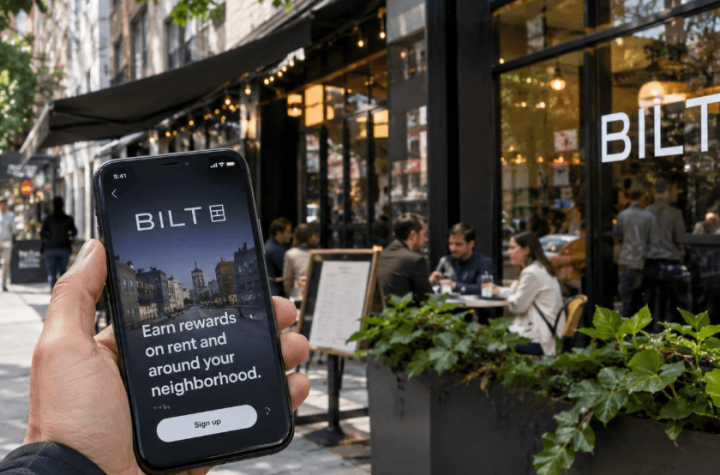
For consumers, the expansion offers opportunities to earn rewards and receive personalized benefits at participating businesses near their homes.
Bilt describes the initiative as the next stage of its development, extending its housing-based rewards network into a broader ecosystem connecting residents, local merchants and major organizations.
“The last tech revolution transformed how businesses sell online, but it largely left behind the businesses that make our neighborhoods special,” Bilt founder and CEO Ankur Jain said in a statement.
Bilt Builds on Growing U.S. Membership and Housing Payments Network
The expansion follows significant growth in Bilt’s existing rewards business.
According to the company, its network now includes more than 8.2 million members, who generated over $12 billion in rewarded transactions at local businesses during the past 12 months.
Founded in 2021, Bilt has established a presence in approximately one in four U.S. apartment buildings.
The company also expects to process more than $100 billion in housing payments in 2026, reflecting the scale of its housing-focused financial technology platform.
By connecting housing rewards with everyday neighborhood spending, Bilt aims to create additional opportunities for consumers to earn benefits while encouraging spending at participating local businesses.
AI Technology Designed to Support Small-Business Growth
A central feature of Neighborhood OS is its use of artificial intelligence to automate customer engagement and business operations.
Personalized Offers and Automated Customer Rewards
A neighborhood restaurant, for example, could use the platform to identify nearby potential customers, distribute personalized promotions and recognize returning guests.
The system could also automatically apply eligible rewards through the restaurant’s existing point-of-sale technology.
Bilt reports that its AI agents completed more than 2 million real-world actions across over 29,000 businesses during the previous 30 days.
According to the company, 91% of those activities were completed without human intervention.
These figures highlight Bilt’s efforts to automate routine commercial activities, although the long-term impact on merchant revenue and customer retention remains to be seen.
Neighborhood ID and Neighborhood Pass
The platform introduces two additional features intended to improve the customer experience.
Neighborhood ID is described as a privacy-preserving technology that connects customer interactions across participating businesses without requiring the exchange of raw customer data.
Neighborhood Pass allows eligible members to access personalized offers, rewards and other benefits at participating merchants.
Together, these features are intended to create a more connected local shopping and dining experience.
Bilt for Business Expands Into Membership Programs
Alongside Neighborhood OS, the company is introducing the Bilt Membership Platform, another offering within its Bilt for Business division.
The membership platform allows organizations in industries such as sports, travel, hospitality, financial services and workplace benefits to develop branded membership programs.
Businesses can also use the technology to extend existing rewards programs into local communities.
The approach could allow larger organizations to offer customers benefits beyond their traditional services while directing additional activity toward neighborhood merchants.
Major Technology Partnerships Support Nationwide Expansion
Bilt is working with several established payment and commerce technology companies to expand the platform’s reach.
Its partners include Verifone, Clover from Fiserv, Shift4, OpenTable and Grubhub.
These integrations could eventually make Neighborhood OS accessible to millions of merchants across the United States.
However, the company said new integrations and capabilities will be introduced gradually, with phased rollouts beginning in 2027.
Hyatt and Meta Explore Additional Opportunities
Bilt and Hyatt are also exploring ways to connect World of Hyatt membership benefits with neighborhood experiences available through Neighborhood OS.
Separately, Bilt plans to collaborate with Meta in 2027 to provide educational programs and business resources for small-business owners.
The partnerships reflect the company’s strategy of connecting established loyalty programs, digital commerce infrastructure and local businesses through a shared technology network.
Bilt Supports Community Development Initiatives
Beyond its technology expansion, Bilt announced a $100,000 contribution to the Local Initiatives Support Corporation, a community development organization.
The initiative aligns with the company’s broader emphasis on supporting neighborhoods and strengthening connections between housing, local commerce and community resources.
Bilt’s Expansion Signals a Broader Rewards Strategy
Bilt’s launch of Neighborhood OS marks a significant shift beyond its original housing rewards business.
By combining AI-powered merchant tools, personalized consumer benefits and partnerships with major commerce providers, the company is positioning itself as a technology platform connecting everyday spending with neighborhood businesses.
The success of the expansion will depend on merchant adoption, the effectiveness of its AI tools and whether consumers find meaningful value in the new rewards offerings as the platform rolls out additional capabilities in 2027.

John Irving writes for Bjournal, covering news, politics, business, technology, sport, entertainment, and lifestyle. He focuses on clear, reliable reporting and useful information, helping readers stay informed about current events, emerging trends, and stories that matter.


More Stories
Google Gemini AI Plus Subscribers to Lose Access to Pro Models Starting November 13
AI Doomsday Scenarios Renew Debate Over Risks to Humanity
Apple Releases macOS 27 Golden Gate With Siri AI and Major New Mac Features